
Eye care should be accessible to everyone
CBM Global Disability Inclusion works with local partners, Organisations of Persons with Disabilities and health systems to make eye care more accessible, equitable and disability-inclusive.
We strengthen inclusive eye health in some of the world’s least-served health systems, supporting people across the full journey of care — from community outreach and early detection to treatment, low vision services, rehabilitation and mental health support.
What makes our approach unique
Our approach brings together disability inclusion, clinical eye care, rehabilitation, mental health and long-term systems change.
Disability-inclusive
We work with Organisations of Persons with Disabilities to identify and remove barriers across the eye care journey.
This helps ensure eye health services are accessible, equitable and responsive to people with disabilities, including people with irreversible vision loss.

Holistic and cross-sectoral
Eye health is connected to daily life, wellbeing and participation.
We link eye care with rehabilitation, low vision support, peer support and mental health services so people receive support beyond diagnosis or treatment.

Systems-embedded and locally led
We work through local partners, Ministries of Health, hospitals and community organisations.
This helps ensure inclusive eye health is embedded in national systems, local services and long-term health planning.
How we deliver change
CBM Global supports inclusive eye health through three connected areas of work.
We model inclusive approaches
- We work with partners to test practical ways of making eye health services more accessible and effective.
We advocate for inclusive policies
- We support policies and strategies that embed inclusive eye health in national health planning, universal health coverage and disability-inclusive health systems.
We provide technical advice
- We share tools, evidence and guidance to help partners, governments and networks strengthen disability-inclusive eye health at scale.

Rights-based, person-centred eye care
Everyone has the right to quality eye care. But for many people, especially people with disabilities and those facing poverty, stigma or isolation, services remain out of reach.
CBM Global works to prevent avoidable blindness and vision impairment while improving access for people who are often excluded from care.
We support the full continuum of eye health, including:
- Community awareness and outreach
Helping people know when and where to seek care. - Newborn and childhood screening
Supporting earlier detection of eye conditions in babies and children. - Early detection and referral
Strengthening links between communities, primary care and specialist services. - Treatment and specialist care
Improving access to cataract surgery, refractive services and care for conditions such as diabetic retinopathy and glaucoma.
- Low vision and rehabilitation
Supporting people with permanent vision loss to access practical support, assistive services and rehabilitation. - Mental health and peer support
Connecting people to psychosocial support, peer groups and community-based services where needed.
Through partnerships with Organisations of Persons with Disabilities, Ministries of Health and eye health actors, we work to embed inclusive eye health in national strategies, training systems and local service delivery.
What sets us apart?
CBM Global brings together practical innovation, disability inclusion and systems change across the full eye health journey.
We support practical tools that bring eye screening closer to communities.
Through our collaboration with the University of St Andrews, we support the use of Arclight, an affordable and portable diagnostic tool that helps primary-level health workers screen for eye conditions closer to where people live.
This helps reduce delays in detection, strengthen referral and improve access for people in rural and underserved communities.
We support children and families beyond clinical treatment.
CBM Global supports newborn and early childhood vision screening, paediatric eye care training and mental health-informed support for families.
We also promote parent-led peer support groups, especially for families of children with visual impairments.
We help eye health facilities identify and remove barriers to care.
Our Accessibility GO! approach supports hospitals and clinics to assess accessibility across the full patient journey, from registration and communication to treatment, follow-up and post-operative care.
This work considers not only physical access, but also staff attitudes, information, clinical procedures and the overall patient experience.
We work with partners to improve access to glasses, low vision services and practical support.
In low-resource settings, this includes exploring sustainable models such as in-hospital optical shops, low-cost reading glasses and stronger referral pathways.
We recognise that vision loss can affect confidence, independence, relationships and wellbeing.
For people living with irreversible vision loss, we connect inclusive eye health with community mental health, rehabilitation, peer support and psychosocial services.
This helps ensure support continues beyond diagnosis or treatment.
Track record and case studies
CBM Global’s work in inclusive eye health is built on decades of experience and strong local partnerships.
Across Africa and Asia, we work with Ministries of Health, Organisations of Persons with Disabilities and specialist institutions to advance integrated, people-centred eye care and improve access for people who are often excluded.

91,200+
people supported to receive sight-restoring cataract surgery in 2025
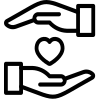
1.76 million+
people received medical screening, including around 1.47 million people screened for eye diseases
Countries: Malawi, Zimbabwe and Madagascar
Focus: Primary eye care, early detection and community-level screening
In partnership with the University of St Andrews, CBM Global has supported training for primary eye care workers using Arclight, an affordable and portable diagnostic tool.
Arclight helps frontline health workers identify eye conditions closer to where people live. This supports earlier detection, faster referral and better access for people in underserved communities.
In Zimbabwe, Arclight has also been used as part of diabetic retinopathy screening, strengthening eye care within wider health services.
CBM Global is also exploring how Arclight can support newborn and early childhood vision screening, including red reflex testing to identify possible congenital eye conditions earlier.
Country: Papua New Guinea
Focus: Low-cost glasses, low vision support and sustainable services
In Papua New Guinea, CBM Global has worked with the Ministry of Health and the OneSight EssilorLuxottica Foundation to support an in-hospital optical shop offering low-cost reading glasses and clip-on glasses.
The initiative includes workforce training, stock management, pricing systems and integration into the public referral system.
This approach is helping explore a sustainable model for low vision and refractive services in low-resource settings, while also monitoring access for people with disabilities.
Country: Nepal
Focus: Accessibility, OPD leadership and inclusive service delivery
In Nepal, CBM Global is piloting the Accessibility GO! toolkit with Lahan Eye & Ear Care System, one of the country’s high-volume eye care providers.
The pilot supports facility-based accessibility assessments, staff training led with Organisations of Persons with Disabilities, and the development of practical guidance and training tools.
This work builds on previous Accessibility GO! activities in Laos, where partners adapted materials to improve accessibility and communication, including for Deaf people.
Our work in action
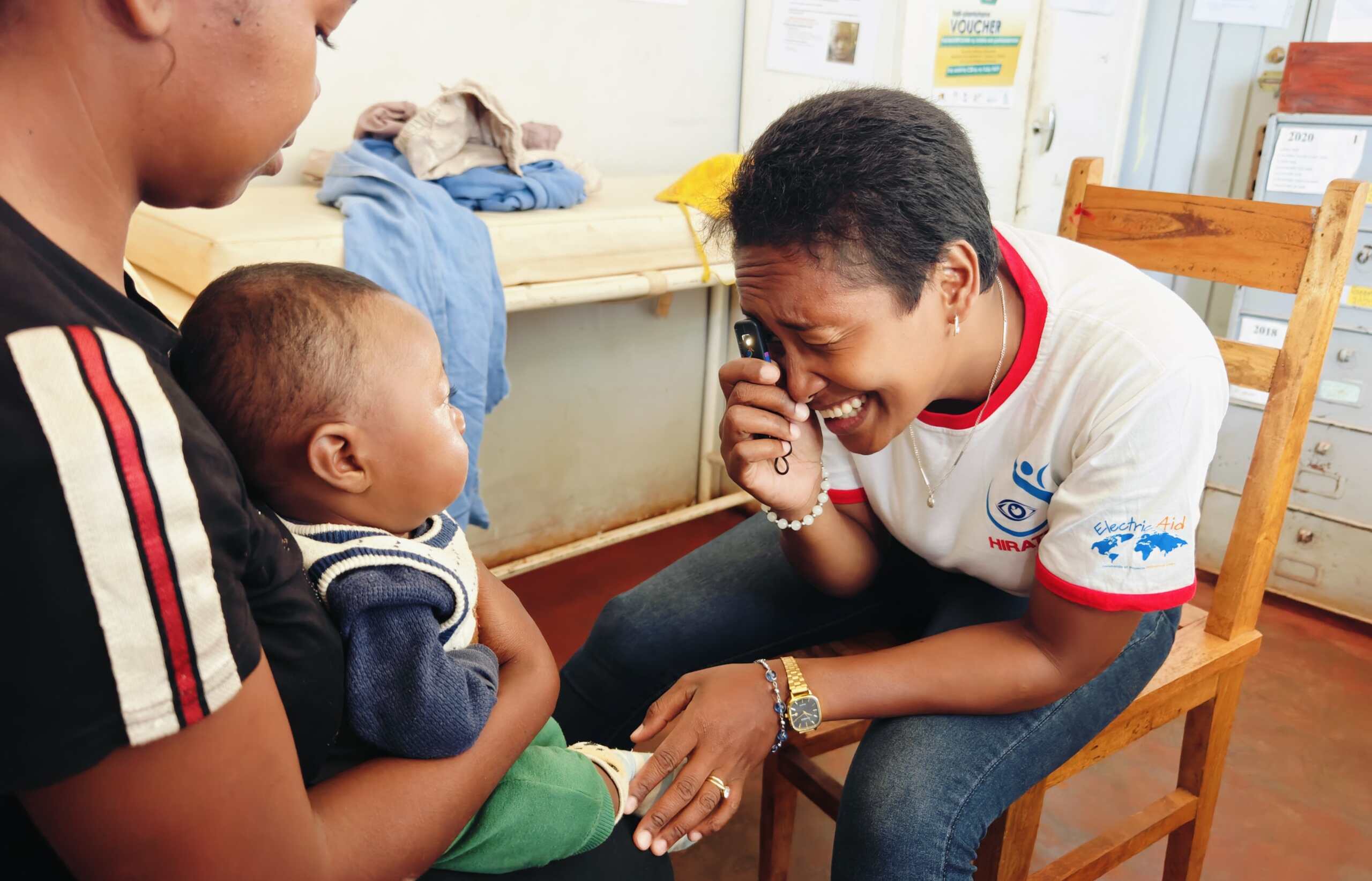
Lighting the Path to Sight: How Early Eye Screening is Changing Children’s Futures in Madagascar
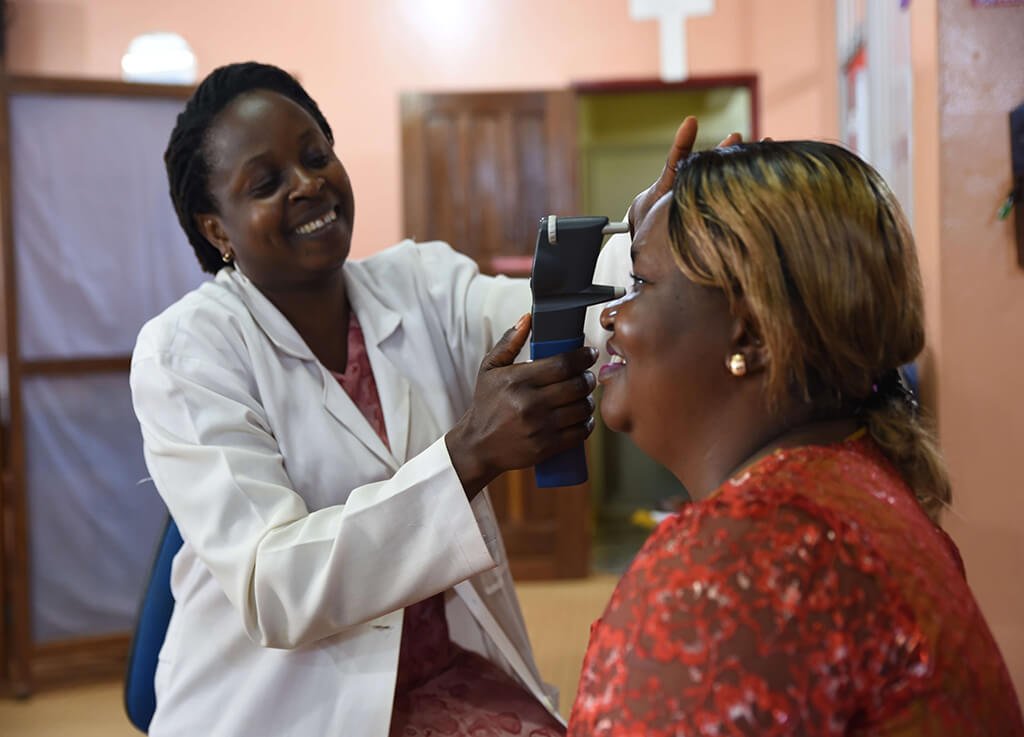
Glaucoma: Fourth largest cause of vision loss is a “silent disease”