
Protecting People through Data: Philippine Partners Begin a Shared Learning Journey
News | June 26, 2026
Data protection is often seen as a technical subject: policies, consent forms, passwords, storage folders, and reporting requirements. But at its heart, it is about people.
Every name, photo, story, phone number, disability-related detail, or health record belongs to a person whose dignity, safety, and rights must be protected.
For organisations working in development and humanitarian settings, data protection is not a back-office concern. It is part of safe, ethical, and inclusive programming. Data is often collected with good intentions: to provide support, report impact, understand people’s needs, or improve services. But when personal information is not handled carefully, it can expose people to stigma, discrimination, exclusion, or harm.
This is especially important when working with persons with disabilities. Information about a person’s disability, health, assistive devices, communication needs, or support requirements can help organisations provide better services and reasonable accommodation. But if shared without care, the same information can also increase risks. Responsible data practice means recognising both the usefulness and sensitivity of this information.
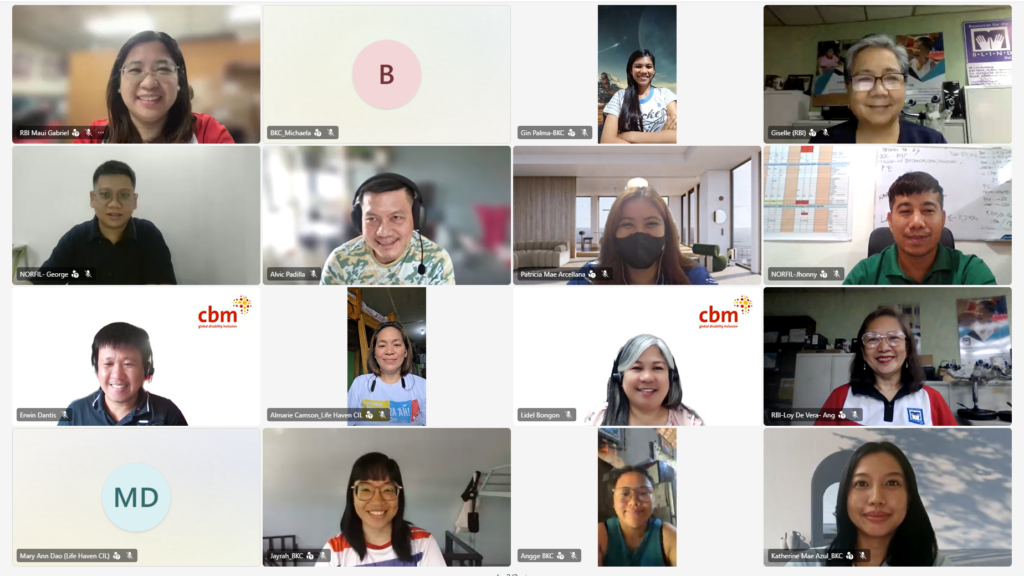
This was the central message of the first CBM Global Philippines Partners’ Meet, held online on 21 April 2026. The session brought together 26 partners from Organisations of Persons with Disabilities and non-government organisations across the country to reflect on how data protection can be applied in everyday programme and humanitarian work.
The Partners’ Meet was created as a regular space for shared learning, shaped by partner feedback and CBM Global’s commitment to localisation, mutual learning, and disability-inclusive practice. Rather than a one-way training, the session provided an opportunity for partners to exchange experiences, ask questions, and explore practical situations they encounter in their work with communities.
The first session, Data Protection in Practice, focused on what happens before, during, and after information is collected. Through case-based discussions, partners explored real-life examples such as gathering attendance sheets, taking photos for donor reports, developing case stories after a typhoon, sharing quarterly reports, and collecting information in evacuation centres.
These examples helped show that data protection is not separate from programme quality. It is part of working safely, respectfully, and responsibly with people and communities.
What this means in practice
In daily programme work, responsible data protection can begin with simple but important decisions. It may mean checking whether a photo is really needed for a report, removing names from a case story, storing attendance sheets in a secure folder, or sharing only summary-level data with donors. It may also mean making consent conversations more accessible by using plain language, local languages, sign language interpretation, or other communication support.
Throughout the discussion, partners shared strong existing practices. Some highlighted that disability-related information should only be collected when it is necessary, such as to provide reasonable accommodation, and that people should never be pressured to disclose personal information. Others reflected on the importance of using aggregated or cleaned data in reports, securing files during transfer, obtaining informed consent for photos and interviews, and avoiding personal details in captions or public materials.
As one participant reflected, “Even in emergencies, people do not lose their data rights.” This reminder helped ground the discussion in the do-no-harm principle: information gathered to support people should never later expose them to stigma, discrimination, or danger.
Five practical reminders from the session
The session offered practical lessons that are relevant to any organisation collecting information from communities.
- Collect only what is needed. Before asking for personal details, organisations should be clear about why the information is necessary and how it will support the person or the programme.
- Explain consent clearly. People should understand what information is being collected, how it will be used, who may see it, and whether they can say no. Consent should be explained in accessible ways, including through plain language, local languages, sign language interpretation, or other communication support where needed.
- Use photos and stories with care. Images and personal stories can be powerful, but they must be handled respectfully. Consent should be specific, informed, and freely given. Personal details should not be included in captions, reports, or public materials unless they are necessary and agreed.
- Share only what is necessary. Reports, donor updates, and public communications should use aggregated, anonymised, or cleaned data wherever possible. Personal information should not be shared simply because it is available.
- Keep information secure. Attendance sheets, assessment forms, photos, reports, and case stories should be stored safely, shared through secure channels, and accessed only by people who need the information for a clear purpose.
Humanitarian situations prompted particularly important reflections. In emergencies, information may need to be collected quickly to provide assistance, reunite families, or understand people’s functional needs. At the same time, partners affirmed that urgency must not remove people’s rights. Even in crisis situations, people’s data should be handled with care, and consent and safeguards should be strengthened as soon as people are safe and stable.
The session reinforced a simple but powerful message: data protection is not only about compliance. It is about trust.
It means collecting only what is needed, explaining clearly how information will be used, seeking consent in accessible ways, storing information securely, limiting access, and reporting breaches quickly. It also means remembering that every form, report, photo, and story represents a person who has trusted an organisation with part of their life.
Feedback from participants showed that the session was practical, relevant, and easy to engage with. The case studies were especially appreciated because they connected policy to the real decisions partners make in their daily work. Some participants expressed a wish for more discussion time, showing that the session had opened conversations partners were eager to continue.
The first Partners’ Meet closed with a shared commitment to bring the learning back to teams, review current practices, strengthen consent processes, and continue improving step by step.
More than the launch of a regular learning space, the session marked the beginning of a shared journey: one where partners protect people not only through services and programmes, but also through the careful, respectful, and responsible handling of their stories and data.
For organisations working with communities, the question is not only whether data is collected, but whether it is collected with care. Every form, report, photo, and story is an opportunity to uphold dignity, strengthen trust, and do no harm.
https://cbm-global.org/news/protecting-people-through-data
Related News

Neglected no more: why NTDs must be treated as a human rights issue
A disease can be treated. But stigma, exclusion and...

Intersectionality and Persons with Disabilities: Celebrating 20 Years of the CRPD
This piece is written by Elizabeth Lockwood, CBM Global’s...
Reflecting on 2025: A Year of Shared Impact, Partnership, and Hope
Written by David Bainbridge, Executive Director of CBM Global...